
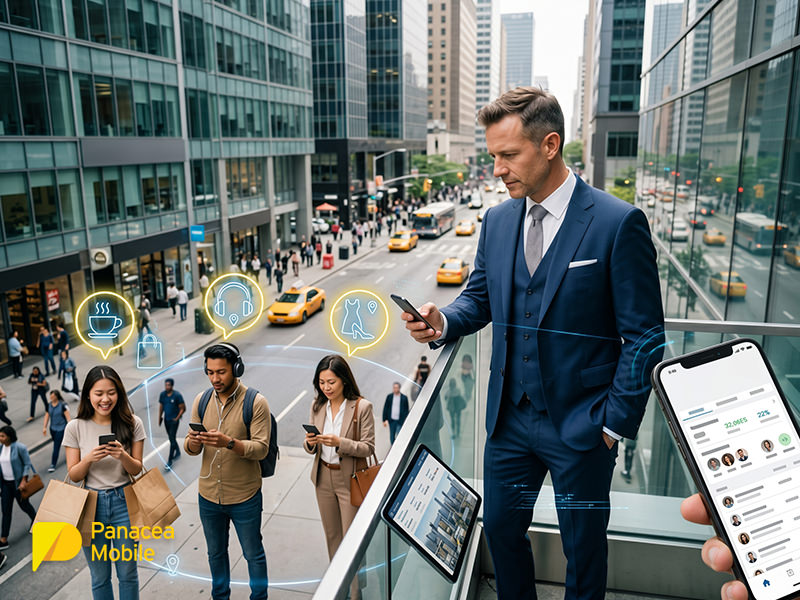
Modern mobile users now ignore generic broadcast messages in favour of content that matches their immediate needs. High-volume sending without context results in lower engagement and potential brand damage in a crowded digital landscape.
Success today requires moving toward data-driven, specific interactions that respect the recipient’s time and location.
- Precision beats volume in modern mobile engagement strategies.
- API integrations allow for automated, trigger-based communication.
- Hyper-relevance protects brand reputation and improves long-term customer value.
- Real-time data transforms a simple text into a high-conversion tool.
Why is the generic blast dead?
Generic broadcast messaging fails because consumers now use AI-driven filters and strict “Do Not Disturb” settings to block irrelevant noise. When a brand sends the same message to every contact, it ignores the specific preferences and behaviours of the individual.
The practice of sending unsegmented bulk messages, often called “spray and pray”, has become a liability for modern businesses. Today, where every notification competes for limited attention, a message that lacks immediate utility is viewed as an intrusion. This shift has forced a change in how we measure success, moving from simple open rates to deep attribution and retention metrics.
High-performing teams now prioritise the quality of the interaction over the total number of recipients.
How does notification fatigue impact ROI?
Notification fatigue occurs when users are overwhelmed by low-value alerts, leading them to opt out of brand communications entirely. This loss of a direct channel is more expensive than the cost of a failed campaign, as it removes the ability to reach that customer for future high-value opportunities.
What is hyper-personalised SMS marketing?
Hyper-personalised SMS marketing is the practice of using real-time data points beyond a name to send messages that reflect a user’s current context. This includes using purchase history, location, and behavioural triggers to ensure the content is useful at the moment of delivery.
Mobile engagement relies on the ability to send the right message when a specific action occurs. In the broader industry of telecommunications, this is known as event-driven messaging. This mechanism functions by connecting a brand’s internal database to a delivery gateway through a secure interface.
The outcome is a communication flow that feels like a helpful service rather than an advertisement. Companies can achieve this level of precision by using comprehensive platforms, such as those offered by Panacea, to bridge the gap between customer data and mobile delivery.
Does context matter more than timing?
Context and timing are equally important, as a perfectly timed message is only effective if the content is relevant to the user’s current situation. For example, a discount for coffee is most effective when the customer is near a physical shop during morning hours.
Read more: The Messaging Evolution: Why a Hybrid SMS & RCS Future Is the Next Frontier for Business
Why use API-driven triggers?
API-driven triggers allow businesses to automate messages based on specific customer actions, such as leaving a website with items in a cart. This removes manual work and ensures that the communication is sent while the brand is still top-of-mind for the user.
Software integration is a core component of modern business automation. In the context of mobile marketing, an API serves as a translator between different systems to allow for instant data exchange.
When a customer performs an action, like completing a sign-up, the system sends a request to a messaging provider to dispatch a confirmation. This process ensures high delivery speeds and operational reliability for the business. Organisations often utilise Panacea Mobile to facilitate these high-speed connections across global networks.
Can CRM data improve conversion rates?
Integrating CRM data into your messaging strategy allows you to use deep insights, such as loyalty status or previous complaints, to tailor the tone and offer of every text. This level of detail makes the customer feel understood, which naturally leads to higher conversion rates and better brand affinity.
Read more: How International SMS Transforms Travel and Tourism Communication
What is the new ROI?
The new ROI of SMS marketing is measured by customer lifetime value and attribution rather than just the cost per message sent. By sending fewer, more relevant texts, brands reduce churn and increase the average order value from each interaction.
| Metric | Old Approach (Spray and Pray) | New Approach (Hyper-Relevance) |
| Volume | High (Mass Blasts) | Targeted (Specific Segments) |
| Trigger | Manual Schedule | Behavioural/Real-time |
| Personalisation | Name Tag Only | Behaviour, Location, History |
| Success Metric | Open Rate | Conversion & Attribution |
| User Response | High Opt-out | High Engagement |
Is less volume better for SMS ROI?
Sending fewer messages increases their perceived value, making it more likely that a customer will actually read and act upon the notifications they do receive. When a brand only reaches out with high-relevance information, it builds a relationship of trust and reliability with its audience.
Strategic communication management involves balancing the frequency of contact with the utility of the message. This concept exists to prevent brand burnout and ensure that mobile channels remain a high-priority inbox for the user. It works by setting caps on how often a person can be messaged and prioritising messages based on urgency or value.
The result is a more sustainable marketing ecosystem where each interaction carries more weight.
How do geofences drive local sales?
Geofencing uses GPS technology to trigger a message when a customer enters a specific geographic area, such as a shopping district. This creates an immediate reason for the customer to visit a physical location, turning digital engagement into foot traffic and real-world sales.
Read more: AI-Driven B2B Marketing: Unlock Hyper-Targeted Growth
How to track SMS attribution?
Tracking attribution involves using unique short links or specific promo codes for different segments to see exactly which message led to a purchase. This data allows marketing teams to see which triggers are performing best and where to allocate their budget for the highest return.
Digital analytics provide the evidence needed to refine any mobile strategy. This concept is used to prove the financial impact of specific marketing spend across various channels. The mechanism involves attaching a unique identifier to each outbound message so that the subsequent customer journey can be mapped back to that initial touchpoint.
The outcome is a clear view of Return on Ad Spend (ROAS) and a better understanding of customer behaviour. This transparency is a key feature for those who integrate their systems with Panacea Mobile.
| Feature | Benefit to Brand | Impact on Customer |
| Real-time API | Faster response times | Immediate assistance |
| CRM Integration | Better data utilisation | Personalised experience |
| Global Reach | Scalable operations | Reliable delivery anywhere |
| Automation | Reduced manual labor | Consistent communication |
Is infrastructure the key to success?
Reliable infrastructure ensures that high-priority, time-sensitive messages are delivered instantly without getting stuck in queues.
Without a stable partner, even the most pertinent and personalised message is useless if it arrives too late to be relevant to the user’s current action.
Reliability in messaging infrastructure is a technical requirement for any global enterprise. This infrastructure exists to handle the massive throughput of data required for worldwide communication.
It works by utilising direct carrier connections and redundant routing to bypass network congestion. The result is a high delivery rate that businesses can depend on for critical alerts and time-sensitive promotions. Companies looking for this level of stability often choose Panacea Mobile as their core messaging partner.
FAQ
What is the difference between bulk SMS and hyper-personalised SMS?
Bulk SMS involves sending a single message to a large list of people at once. Hyper-personalised SMS uses individual data to send unique messages based on specific triggers or behaviours.
How does an API help with SMS marketing?
An API allows your existing software, like a CRM or e-commerce site, to talk directly to a messaging platform. This enables automatic messages to be sent the moment a customer does something on your site.
Will personalised SMS cost more?
While the cost per message is the same, the overall cost-efficiency is higher. You send fewer messages but see more conversions, which means your cost per acquisition is much lower.
Can I use personalisation for transactional messages?
Yes. In fact, transactional messages like delivery updates or appointment reminders are perfect for personalisation. Adding specific details makes these messages more helpful for the customer.
Success in the 2026 mobile landscape requires a transition from high-volume noise to quiet precision. By moving away from the “spray and pray” method, businesses can protect their brand reputation and build deeper connections with their audience.
The shift toward hyper-personalised SMS marketing is not just about technology; it is keenly focused on respecting the customer’s attention and providing value in every interaction. Using a robust messaging platform ensures that these communications are delivered reliably and at scale. As mobile habits continue to evolve, the focus on relevance will remain the primary driver of long-term growth and high conversion rates.
Those interested in improving their mobile engagement strategies can learn more about precision messaging and system integration through the Panacea platform.