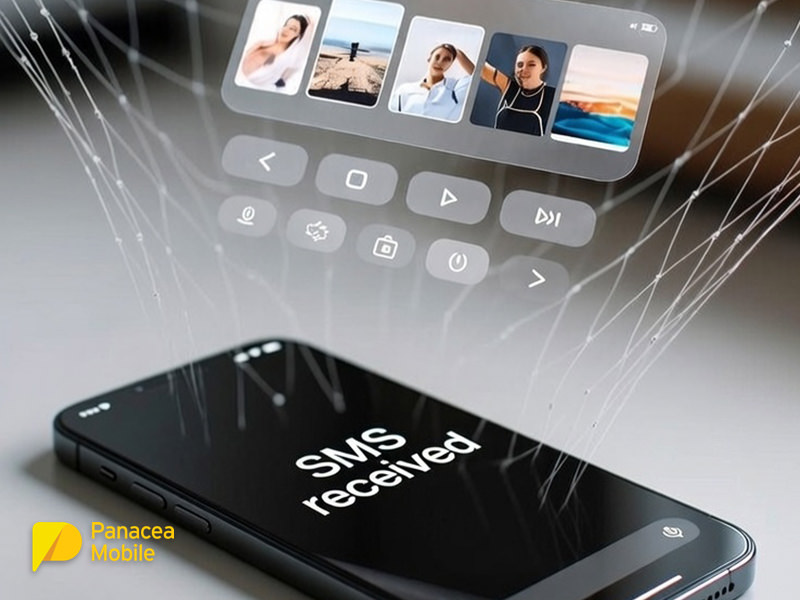
The mobile messaging industry is in the middle of a meaningful shift. RCS Business Messaging now offers rich media, verified branding, and interactive features that SMS was never designed to carry.
But RCS adoption is uneven. Carrier rollouts, device compatibility, and regional infrastructure gaps mean that a significant portion of recipients still cannot receive RCS messages. For businesses, that gap has consequences.
The most forward-thinking approach is not to pick a side between SMS and RCS. It is to understand how the two channels work together. This piece explores the emerging hybrid messaging model and what it will mean for businesses that begin preparing now.
Key takeaways:
- SMS reaches 100% of mobile devices globally, making it the only reliable fallback when RCS cannot deliver
- Intelligent routing attempts RCS first, then defaults to SMS automatically when needed
- AI integration transforms SMS from one-way broadcast into responsive, two-way conversational flows
- The hybrid messaging model is the direction the industry is moving toward for 2026 and beyond
Why Does SMS Still Matter in 2026?
SMS still matters because it is the only mobile channel that works on every device, across every network, without exception. No other technology matches its global device compatibility.
RCS engagement rates are strong when messages reach recipients. The challenge is that device manufacturer and carrier adoption of RCS varies significantly by region. A campaign that displays beautifully on one handset may not reach another at all.
Mobile messaging reliability is one of the most critical benchmarks in A2P communications. As channels multiply, the risk of failed delivery grows. SMS operates on infrastructure that predates smartphones and requires no internet connection or app installation. This makes it the default safety net in any multi-channel strategy. Providers building for enterprise scale build their platforms with this logic at the core, ensuring messages reach recipients regardless of device type or network capability.
Read more: How Mobile Communication Drives Consumer Action: The Power of SMS
What Is a Hybrid Messaging Strategy?
A hybrid messaging strategy routes messages through RCS first, then falls back to SMS if delivery cannot be confirmed. This two-tier approach maximises engagement without sacrificing reach.
Businesses begin by designing rich RCS experiences: product carousels, suggested reply buttons, and location pins. When the platform detects that a recipient cannot receive RCS, it strips the rich elements and delivers the message as standard SMS.
The customer receives the core information either way. No touchpoint is lost because of technology incompatibility.
How Does Intelligent Routing Work?
Intelligent routing works by querying carrier databases to verify RCS support before a message is dispatched. The platform makes that decision in milliseconds.
Channel routing is a foundational capability in modern A2P messaging platforms. It emerged in direct response to the fragmented rollout of RCS, where carriers and device manufacturers adopted the standard at different rates. The system works by checking recipient capability in real time and selecting the appropriate channel automatically. The outcome is near-complete delivery regardless of handset or network. Platforms built for enterprise A2P messaging have developed these routing engines as a core infrastructure component rather than an optional feature.
If RCS is confirmed, the rich version is sent. If RCS is unavailable or the recipient is offline, SMS delivers the message within seconds. No intervention is required from the sender.
Can AI and SMS Work Together?
AI and SMS work together through API integration that connects natural language processing engines to messaging platforms. This transforms a broadcast channel into a responsive, two-way conversation.
Traditional SMS sent one-way messages. Customers received information but could not engage meaningfully. AI changes this by mapping customer responses to predefined workflows. An appointment reminder that receives a RESCHEDULE reply can trigger an automated booking adjustment without human involvement.
Lead qualification becomes automatic. Prospects who respond to initial SMS outreach are assessed for intent based on response patterns. High-intent contacts receive priority follow-up; others enter automated nurture sequences.
Read more: The Heartbeat of Mobile Transactions: How SMS and USSD Power Financial Inclusion in South Africa
How Does AI Handle SMS Replies?
AI handles SMS replies by analysing response content against trained language models and mapping intent to actions. Simple keywords trigger direct workflows; complex replies route to more sophisticated processing that reads context and sentiment.
Conversational AI for SMS is not a new concept, but its accessibility has grown significantly. Businesses that previously needed dedicated development resources can now connect AI services via standard API integrations.
Messaging Channel Comparison: 2026 Capabilities
| Feature | SMS | RCS | Hybrid |
| Device Reach | 100% | 60-70% | 100% |
| Rich Media | No | Yes | Adaptive |
| AI Integration | Yes | Yes | Yes |
| Authentication | Universal | Limited | Optimised |
| Delivery Guarantee | High | Variable | High |
What Role Does SMS Play in Security?
SMS remains the most trusted out-of-band authentication channel. Financial institutions and healthcare providers depend on it for two-factor authentication because it works even when internet connectivity fails.
Out-of-band authentication is a security practice that delivers verification codes through a separate channel from the primary login system. It exists to prevent account compromise even when credentials are exposed. SMS delivers these codes independently of internet infrastructure, making it resistant to browser-based attacks. The result is a reliable security layer that enterprise risk teams continue to treat as a requirement. This is why major banks and payment providers maintain SMS support alongside any newer authentication channels they introduce.
RCS Business Messaging offers verified sender badges and encrypted transmission. Despite these advances, SMS provides a universal backup when advanced protocols encounter device or network limitations.
Read more: Navigating the A2P Evolution: Why RCS Is Not Replacing SMS
How Should Businesses Prepare for Hybrid Messaging?
Businesses should begin by auditing their current SMS infrastructure before layering in RCS capabilities. A strong foundation makes the transition to intelligent routing far more straightforward.
Design RCS content with a clear core message that still communicates effectively as plain text. Test both versions. Implement analytics that report performance across both channels so it becomes visible which format resonates best with different audience segments.
The billing model the industry is moving toward reflects the direction of hybrid strategies. The most sustainable approaches mirror the logic of charging based on successful delivery rather than attempted sends, aligning cost with confirmed customer reach. Businesses that understand this model early will be better positioned when the technology and commercial frameworks converge.
The most forward-thinking businesses are not waiting for global RCS adoption to catch up. They are building the infrastructure now so that when the technology matures, they are ready to operate at full capability from day one.
Why Does Strategic Preparation Matter Now?
Strategic preparation matters now because the gap between early adopters and late movers in messaging infrastructure is difficult to close quickly. Businesses that align their strategy to the hybrid model before it becomes standard will enter that moment with trained workflows, proven routing logic, and audiences already accustomed to the channel mix.
This is the space where a strong messaging partner adds the most value. Rather than selling a finished product, the right provider works alongside clients to actively explore hybrid models, test routing configurations, and build the operational readiness that makes adoption smooth when the underlying technology is ready. Panacea Mobile approaches this as a long-term partnership: working with clients now so that the transition, when it comes, is a step forward rather than a scramble to catch up.
The vSMSC infrastructure underpinning next-generation messaging is evolving. Businesses that use this period to develop their strategy, understand the commercial models, and pressure-test their fallback logic will be positioned to move quickly. Those that wait will be reactive.
Frequently Asked Questions
Is RCS replacing SMS in 2026?
RCS is not replacing SMS. The two channels serve complementary roles. RCS enhances engagement on supported devices while SMS maintains universal reach. Intelligent routing uses both, and the industry is moving toward treating them as a single, unified strategy rather than competing options.
What happens when RCS fails to deliver?
A properly configured hybrid system detects the failure and retries via SMS within seconds. The recipient receives the message content without knowing that a fallback occurred.
Can small businesses access hybrid messaging?
The billing models emerging around hybrid platforms are designed to scale. Businesses pay SMS rates for fallback messages and RCS rates only when rich delivery is confirmed. This structure makes the approach accessible beyond enterprise budgets.
How do I measure hybrid messaging performance?
Track overall delivery rates, channel split, and conversion by format. Compare engagement between RCS and SMS recipients. Calculate cost per acquisition across both channels to understand where your budget performs best.
Does AI integration increase SMS costs?
AI typically reduces overall messaging costs by automating responses and qualifying leads without manual intervention. Most businesses see a positive return within three months of implementation.
Build Your Hybrid Messaging Strategy
The brands entering 2026 with a competitive messaging advantage are the ones treating SMS and RCS as partners rather than competitors. Rich media drives engagement when it reaches the right device. SMS carries the message when it does not. Building that infrastructure now, before global RCS adoption catches up, is the strategic move. The goal is not to choose between modern and reliable. It is to build a strategy that delivers both.